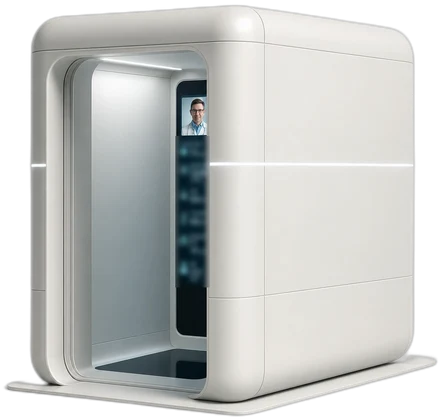
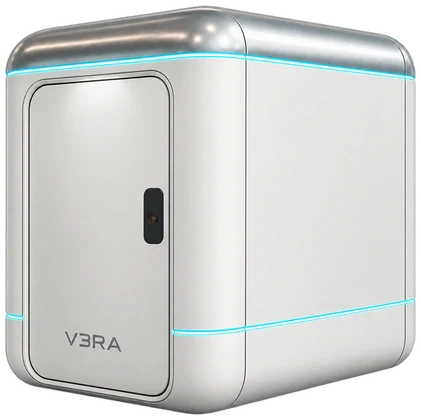
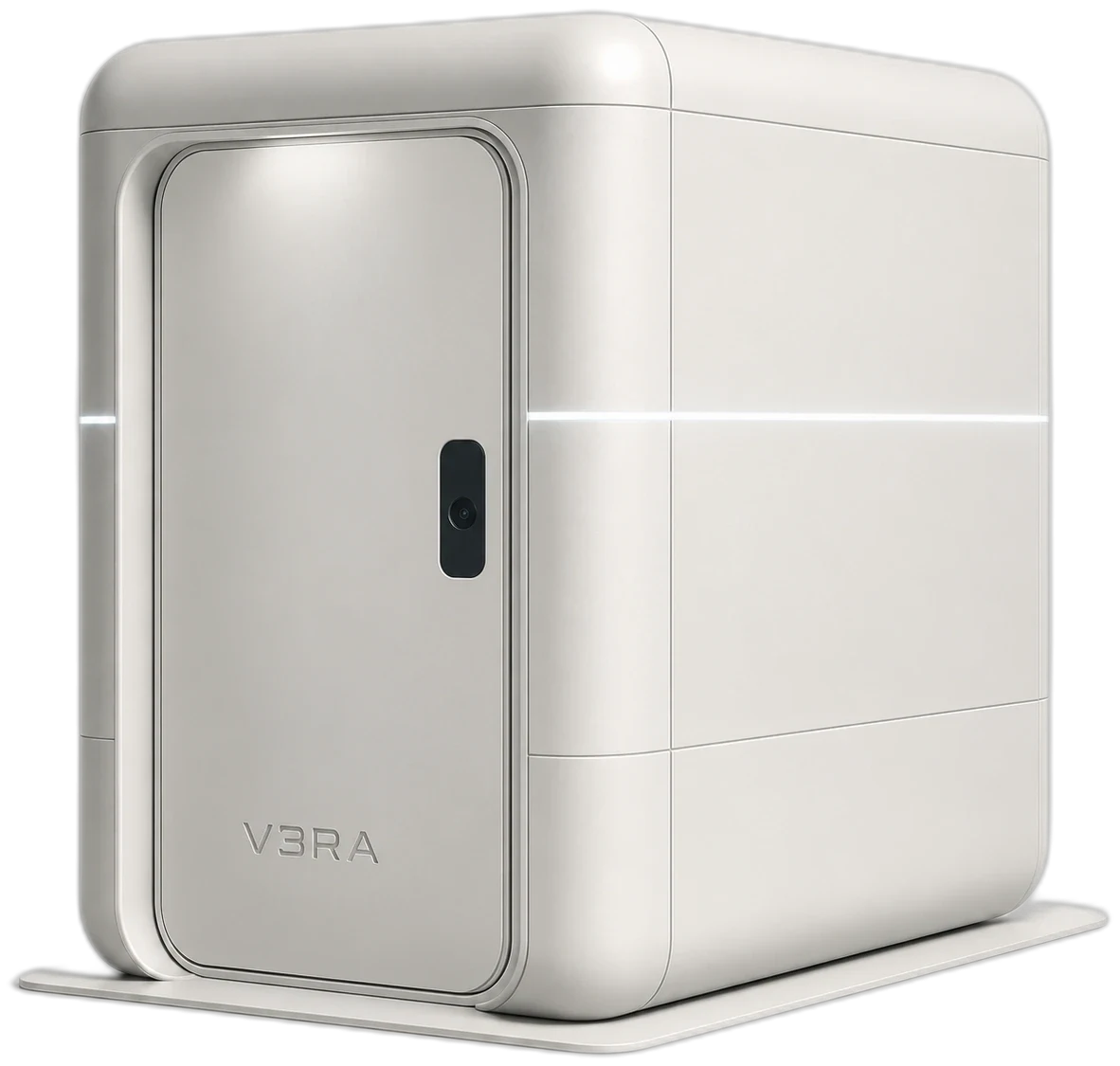
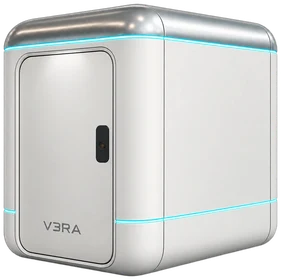
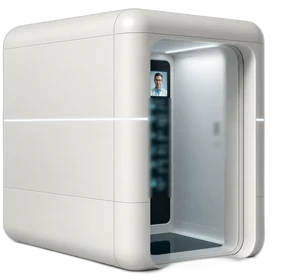
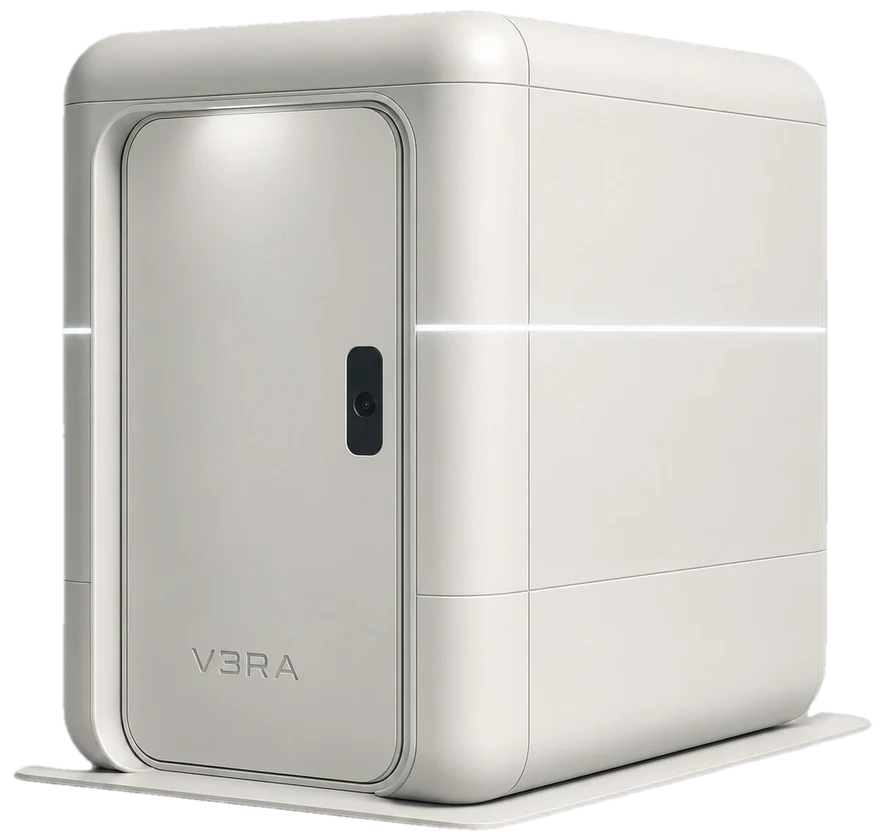
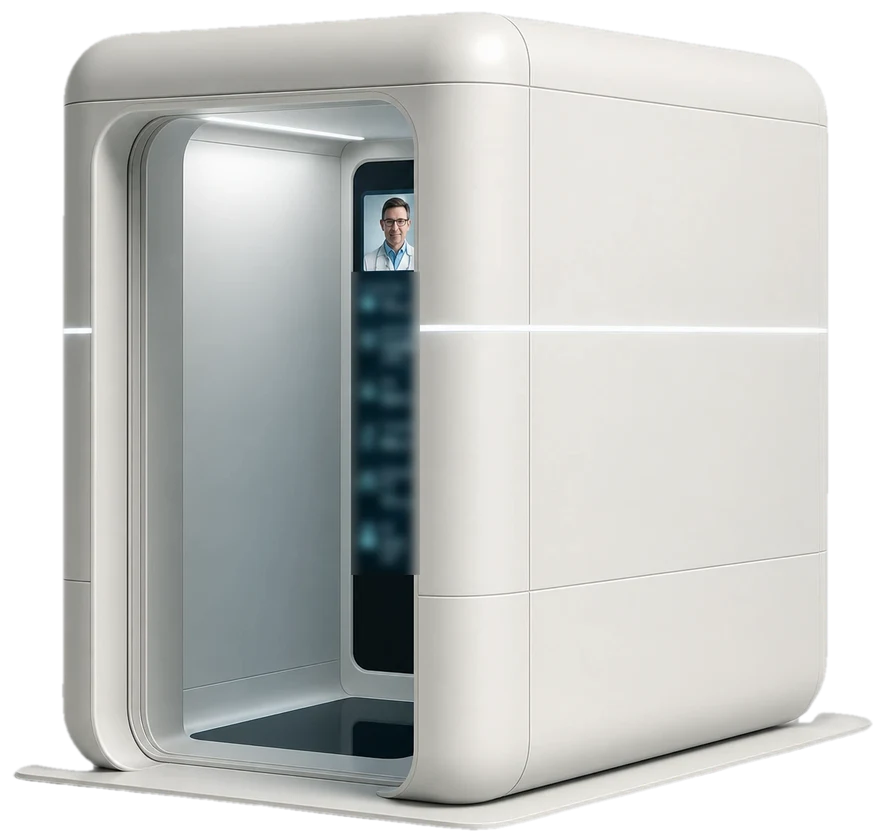
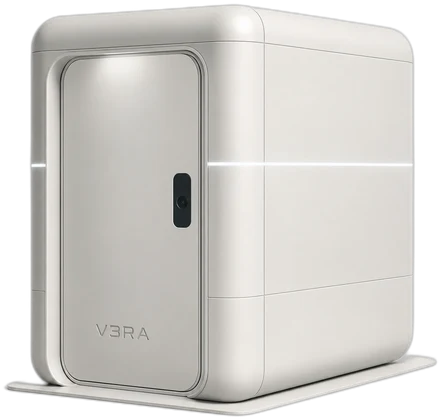
• Render of the Intake Pod in white, its door closed.The same Pod with its door open on the screen inside.
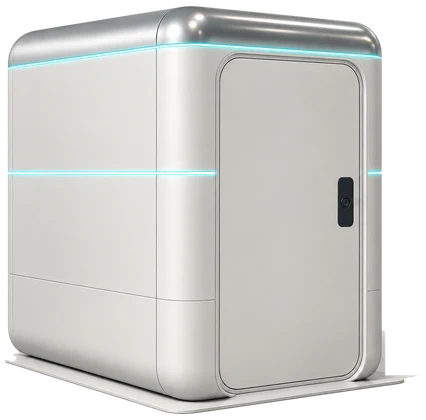
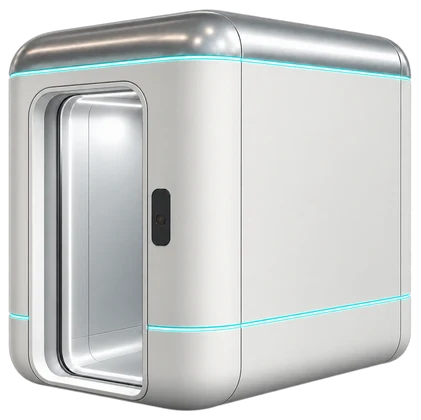
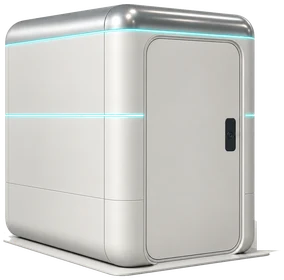
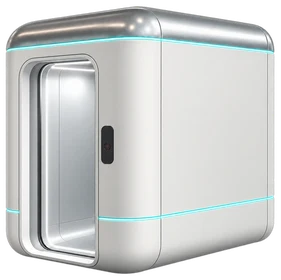
  • Render of the Intake Pod with a silver crown, turned to the right.The same Pod with its door open.
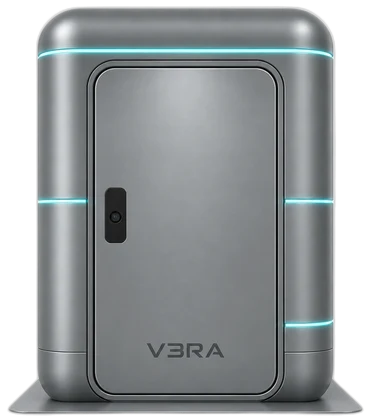
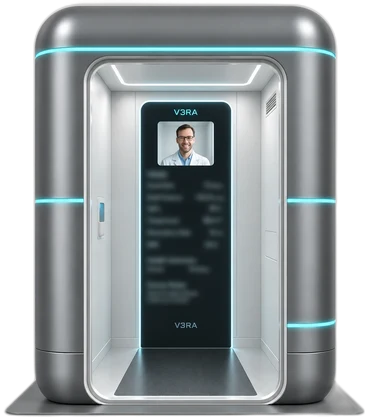
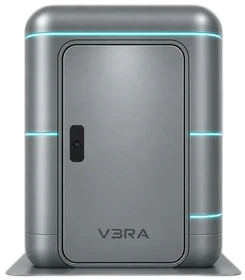
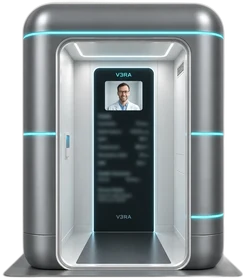
  • Render of the Intake Pod in grey, facing forward, its door closed.The same Pod with its door open on the screen inside.
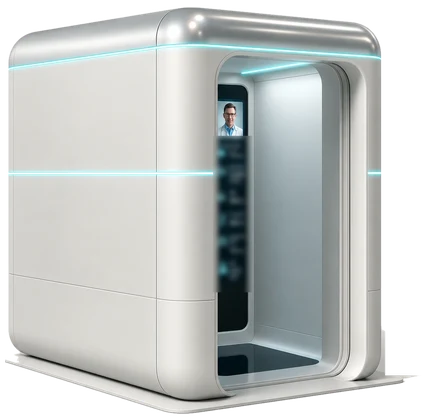
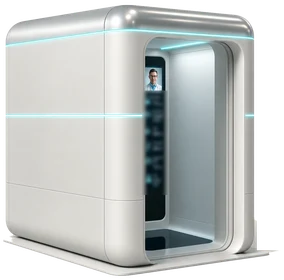
  • Render of the Intake Pod with a silver crown, seen at three-quarters.The same Pod with its door open.
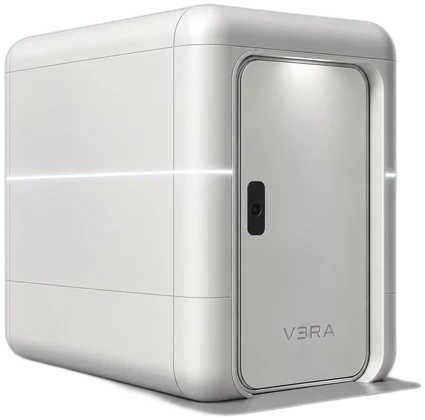
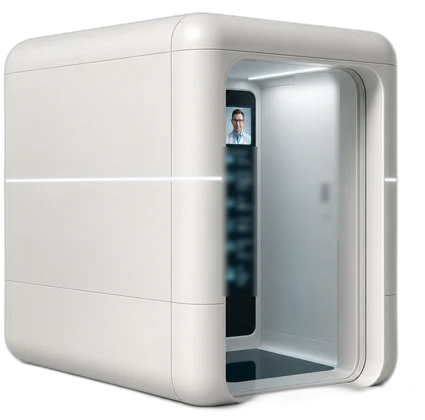
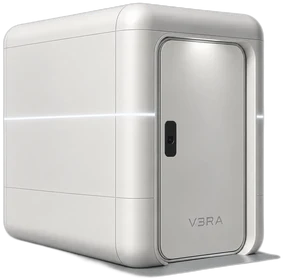
  • Render of the Intake Pod in white, seen from the side.The same Pod with its door open.

Autonomous triage, anywhere it stands.

Products

One system. As many forms as care takes.

Four things and one architecture. The Pod is where an encounter begins; the platform carries it; VAS is the substrate underneath both; the Agent is what remains with the patient after they leave. Each one says here what it is today, not what it will be.

Hardware · where an encounter begins

Intake Pod

Autonomous triage in its own enclosure, sited where patients arrive. No forms, no front desk, and a physician on the other end of every visit.

  • Vitals taken without touching the patient
  • An integrated scale in the floor
  • Built to ADA accessibility requirements
In development Step inside
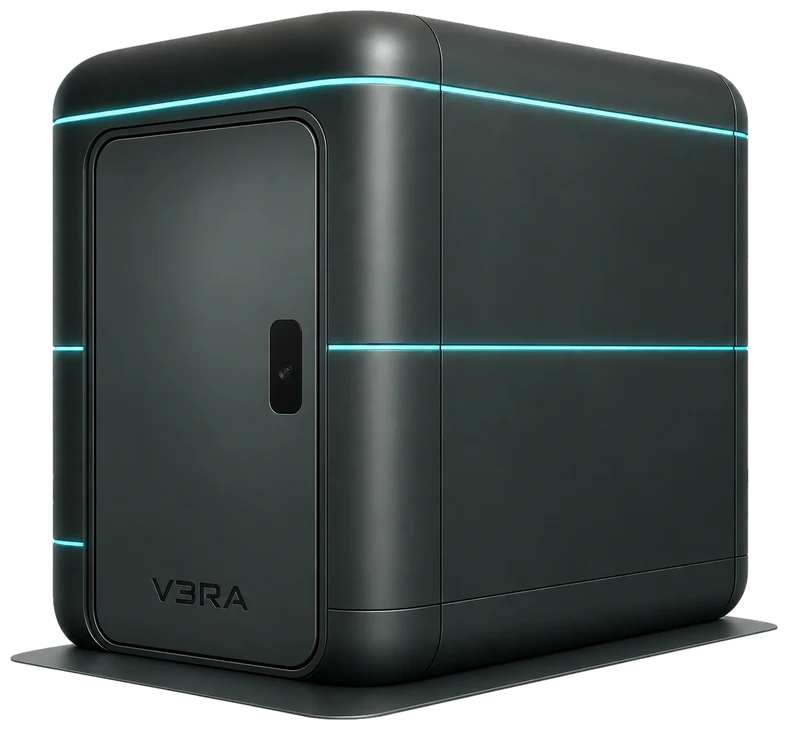
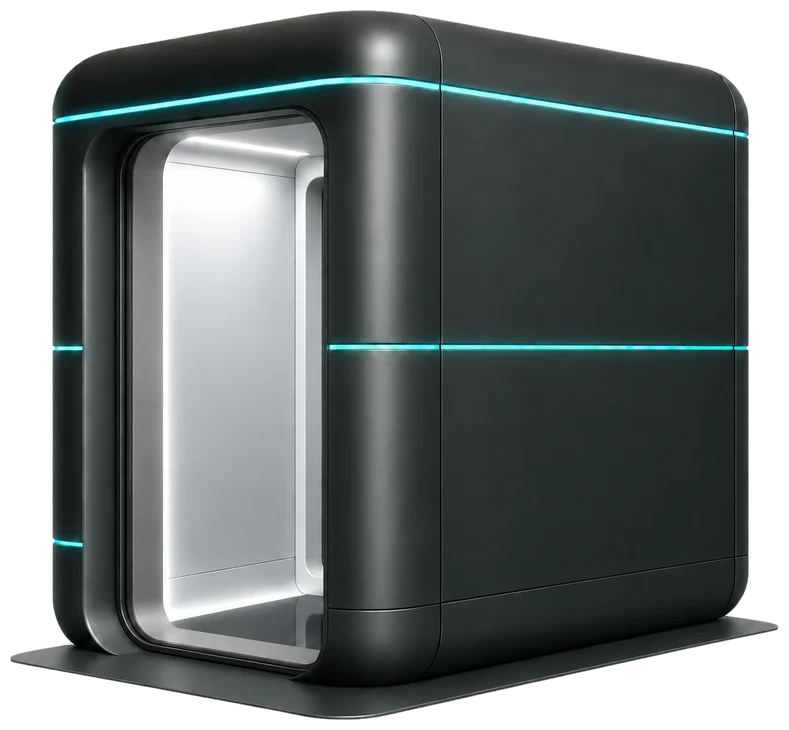
The Intake Pod in graphite, closed.The same Pod with its door open.
Software · what carries it

The V3ra Platform

Four surfaces over one encounter, on one record.

  • Pulseat the door
  • Clinical Intelligencewhile it is open
  • Syncas it closes
  • Chart Auditafter the claim
Live What runs inside
Substrate · underneath both

VAS

What sits under every recommendation the platform makes.

  • A hash-chained record: every recommendation in chain of custody
  • A deterministic failsafe: critical values escalate without asking a model
  • Kill switches: at facility and at clinician level
Live The substrate
Intelligence · what remains with the patient

The Agent

The patient-side intelligence layer of the same architecture: continuous between encounters, and connected to the clinical system only when the patient chooses. A form factor is how it becomes present, not what it is.

In development The patient layer
  • It runs today on a phone: one phone, one user
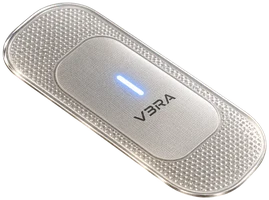
  • Two body-worn forms drawn: neither manufactured, neither offered for sale
  • The form is not settled, and the Agent does not wait on it
The Intake Pod

Step inside the enclosure.

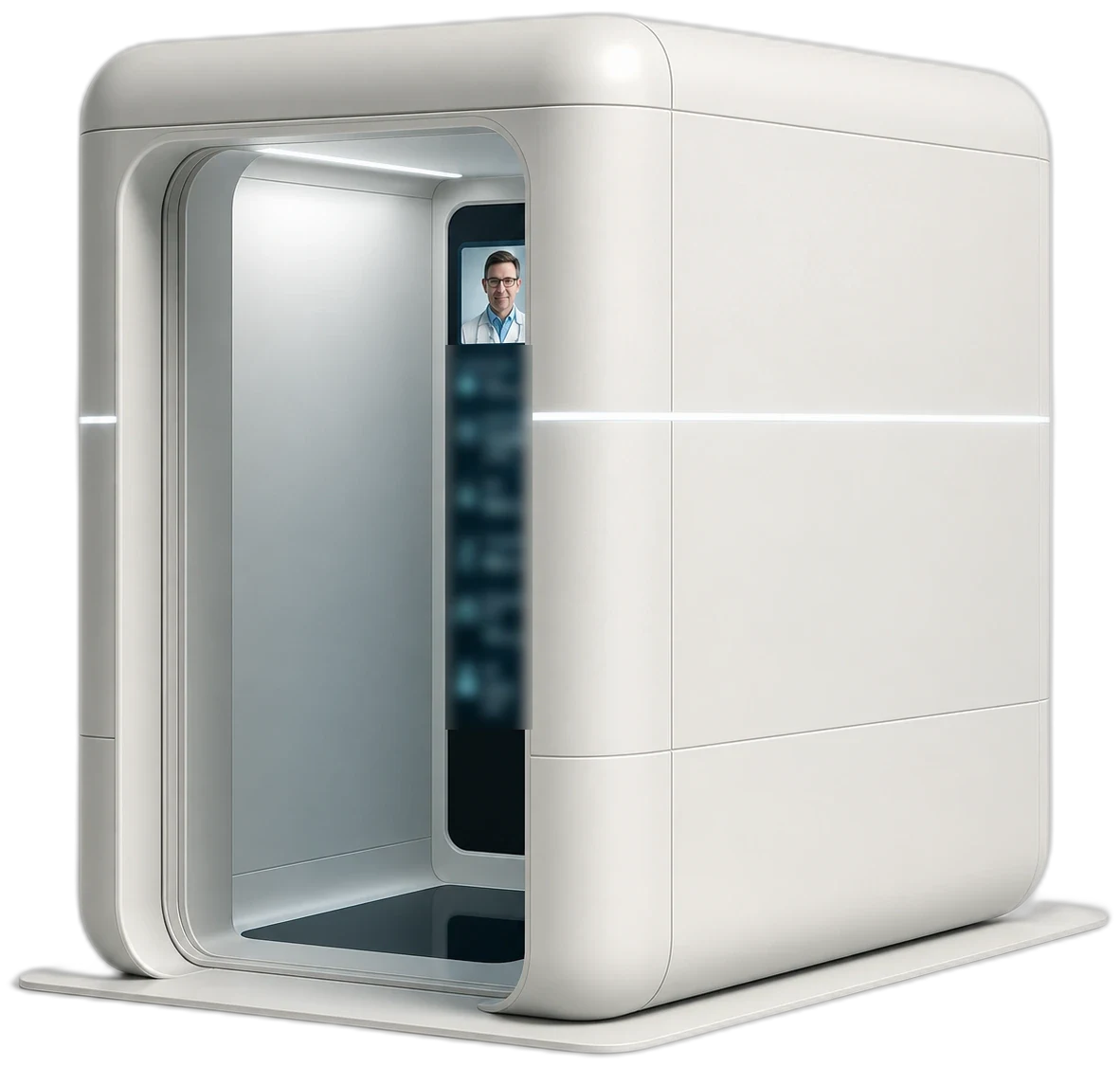
The Intake Pod in white, its door open on the lit cabin and the screen inside.The same Pod with its door closed.
  • The screen Asks out loud, one question at a time. Nothing to read, nothing to fill in.
  • The sensing Blood pressure, heart rate, oxygen saturation and temperature, taken without a sensor touching the patient, and never typed.
  • The floor An integrated scale. Weight is taken where the patient already stands.
  • The physician Every visit ends on telehealth, with the vitals, the account and the triage already in hand.

Every picture of the Pod on this site is a render, not a photograph. The enclosure is in development; manufacturing is planned to begin in the second quarter of next year, and that date may move.

A visit

Six phases, one encounter.

Door to decision without a desk in between. Hover a phase to open it.

  1. 01ArriveThe patient walks up to it. No queue at a counter, no clipboard, no one to staff it for the visit to begin.
  2. 02IdentifyThe Pod asks who they are and why they came, out loud. Their answers are kept as stated, in their own words.
  3. 03MeasureVitals are taken without touching the patient: never typed, never estimated. A reading that does not arrive is flagged, not filled in.
  4. 04AccountSymptoms, history and medications, asked one question at a time, in the order a clinician would ask them.
  5. 05TriagePulse assigns acuity from the readings and the account, before anyone reaches a desk.
  6. 06PhysicianThe visit ends on telehealth. A physician accepts or overrides the triage, and either way it is recorded.
Where it stands

It starts where patients already arrive.

The setting it is built for

Hospitals & clinics

Ahead of registration, where arriving patients already pass. This is the setting everything on this page describes: a physician on the other end of every visit, a record to write into, and a clinician who can override the triage and have that override kept.

  • Sited ahead of the registration desk
  • Every visit ends with a physician
  • Writes back into the hospital’s own record
How it sits in a hospital
The Intake Pod in white.The same Pod with its door open.
Beyond healthcare

The same enclosure reaches places with no clinician in them at all. These are where it goes once the clinical setting is proven. Not one of them is deployed, and none is sold today.

  • The Intake Pod with a silver crown.The same Pod with its door open.Public spacesAirports, transit hubs, stadiums and shopping centres
  • The Intake Pod in grey, seen from the front.The same Pod with its door open.Remote & offshore sitesRigs, vessels, mines and camps, where a medic may be the only clinician
  • The Intake Pod at three-quarters.The same Pod with its door open.WorkplacesNear the break room, where the shift already is
  • The Intake Pod in white, seen from the side.The same Pod with its door open.Schools & campusesIn the building, where one nurse may cover more than one

What happens when the architecture leaves the hospital?

Enter
What runs inside it

Four surfaces, one substrate.

The Pod is where an encounter starts. These are what carry it the rest of the way. They run on a screen, with or without an enclosure around them.

  • At the doorPulseAutonomous triage from the readings and the patient's own account.Live
  • While it is openClinical IntelligenceA cited differential, and acuity scored two ways.Built · not cleared
  • As it closesSyncCoding drafted from what was decided, with the level and its rule shown.Live
  • After the claimChart AuditEvery chart read back against its claim, every finding cited.Live
VAS A hash-chained record, a deterministic critical-value failsafe, kill switches at facility and clinician level, and chain-of-custody on every recommendation. Underneath all four.
The V3ra architecture

One system, at three scales.

Three layers of one architecture, from the encounter to the individual. This is not a release schedule: the order is how the layers stand on each other, not when they arrive, and only the layer that runs today carries a year.

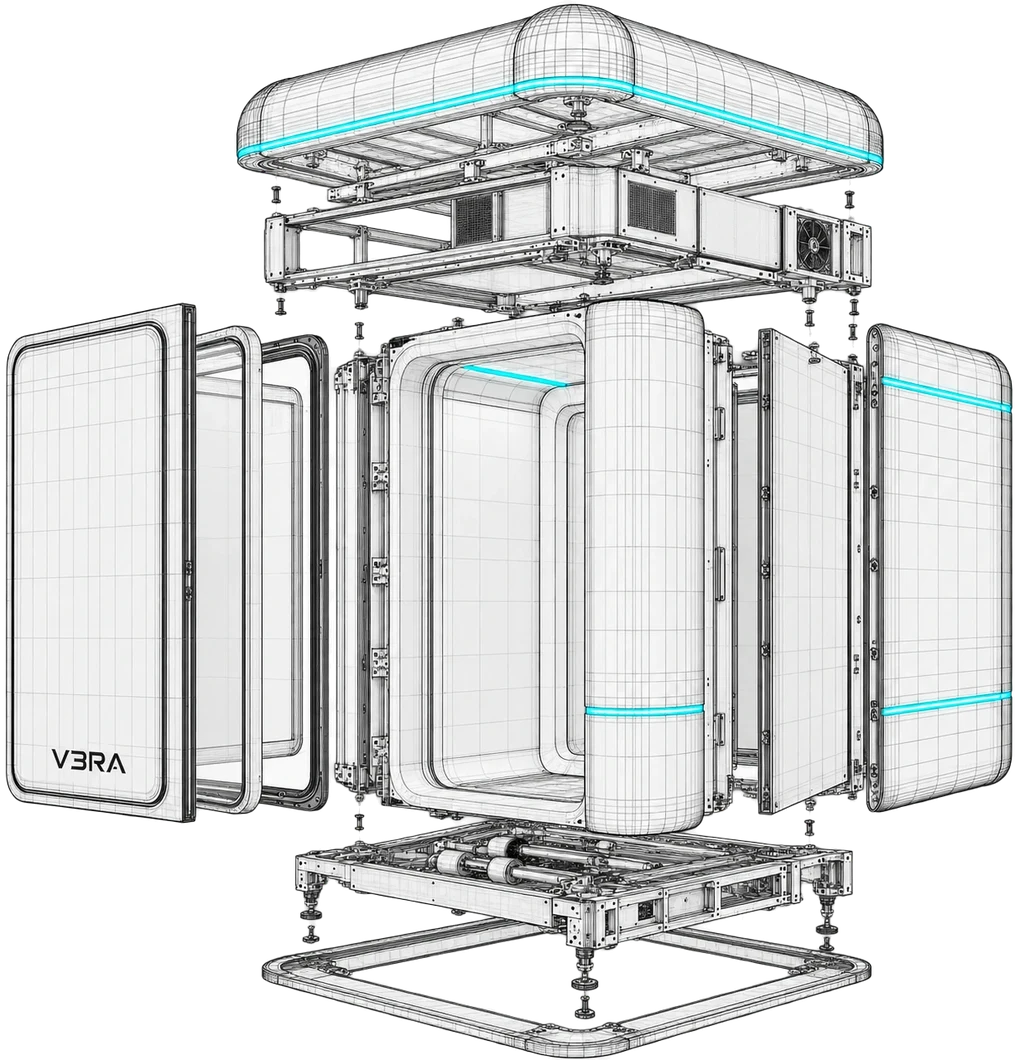
The Intake Pod in white, at an angle.The same Pod with its door open. The Intake Pod drawn apart, as a wireframe. CanopyHEPA-compatible filtration, held at positive pressure Service deck6063-T6 anodised aluminium; grilles that lift out for deep cleaning DoorOne leaf, opening on the cabin CabinA 24-inch medical-grade touchscreen, asking one question at a time Floor frameAn integrated scale: 500 lb, accurate to a tenth of a pound
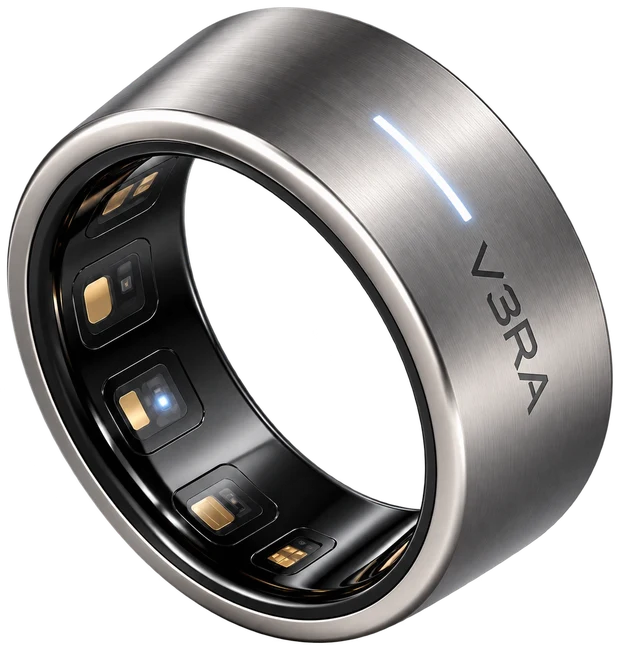
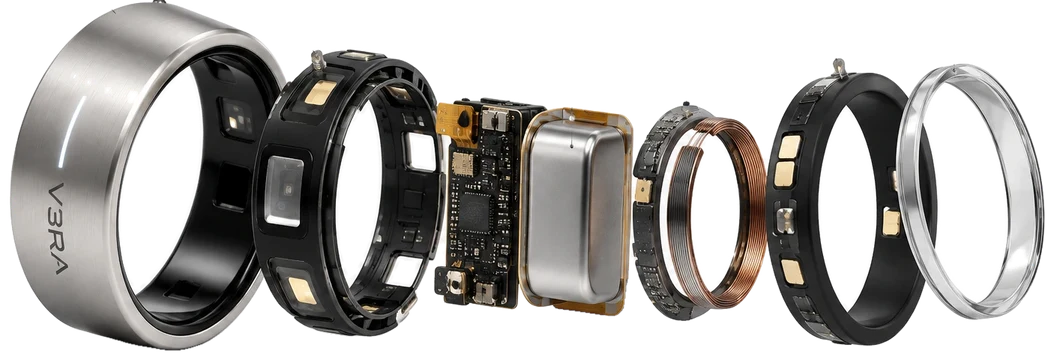
The Agent as the Orbital. The Orbital drawn apart into its seven pieces. Outer shellTitanium, grade 5 Sensor arrayPPG, SpO2, skin temperature, motion Compute moduleUltra-low-power SoC, on device BatterySolid state, curved Charging coilInductive Inner liningMedical-grade polymer Sensor windowSapphire crystal
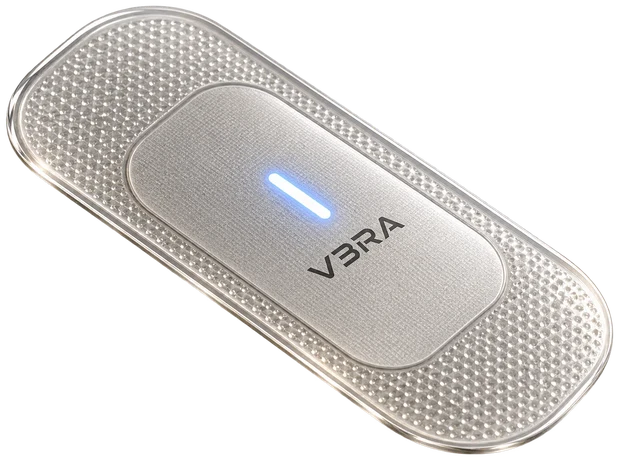
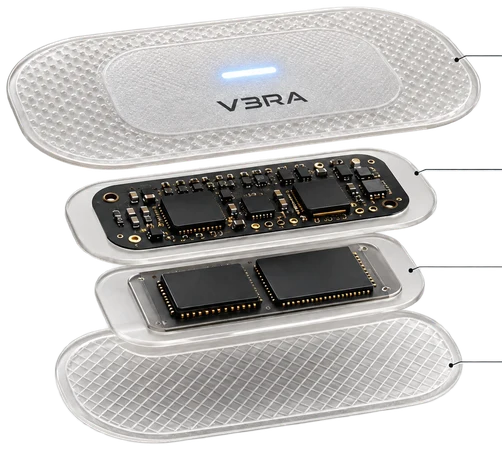
The Agent as a strip, at an angle. The strip drawn apart into its four layers. Ultra-thin shellMedical grade, flexible, breathable Sensor layerBiometric, chemical, environmental ProcessorOn-device intelligence, low power Skin-safe adhesiveHypoallergenic, all-day wear
  1. Care Platform · what runs today

    The V3ra Platform

    The intelligence layer for healthcare operations. What exists today.

    • Autonomous intake, on a screen with or without the enclosure
    • Patient data capture, and the clinical workflow
    • Billing intelligence
    • Epic write-back: live on FHIR R4, structured findings pushed into the chart
    • Audit and governance infrastructure
    Live
  2. Encounter Pod · the enclosure

    The V3ra Pod

    The physical point of entry into autonomous care. This is where the software becomes physical.

    • Autonomous patient intake
    • Vitals and biometric capture
    • Autonomous triage, then physician handoff
    • Clinical data generation and the billing workflow
    • Edge intelligence: design intent
    In development
  3. Continuity Agent · the first form

    The Agent · the Orbital

    The step where the Agent leaves the phone and becomes something worn. Not a wearable company: the Orbital is an interface onto the same architecture.

    In development
  4. Endurance Agent · days at a time

    The Agent · the strip

    The step where a single wearing lasts long enough to see a trend rather than a moment.

    In development
Substrate VAS Not a stage on this line: the substrate that governs it, underneath the whole of it. Live

No date appears on this line, and none is implied by the order. “Live” means it is running in production today. Everything after it is where the architecture goes, not a commitment to when it arrives.

The patient layer

One Agent. Many ways to be present.

The Agent is V3ra’s patient-side intelligence layer: continuous between encounters, connected to the clinical system when the patient chooses, and built on the same substrate that governs the care environment.

The patient is the principal. Always, and without exception. The Agent connects to the clinical system when the patient says so, and at no other time.

Runs today

It runs today. On a phone.

Neither interface has been manufactured, and neither is for sale. Both are renders of something that has never been made. The phone has no picture because there is nothing of ours to photograph. It is simply where the Agent runs today.
  • A render of the Agent as the Orbital.Orbital Long-horizon
  • A render of the Agent as a strip.Strip Long-horizon

The hardware is an interface, not the product.

The form changes. The Agent doesn’t.

Two body-worn forms drawn, and neither of them manufactured or offered for sale. The intelligence is not waiting for them: it runs today on a phone: one phone, one user, which is the whole of it.

Why it matters

The Pod is a node, not a kiosk.

An enclosure that triages people is a useful machine. The same enclosure, standing on a substrate with the patient's own Agent on the other side of it, is something else, and it is the same enclosure either way.

  1. Today PatientPodPhysicianRecord
  2. Not built AgentPodPhysicianRecord

Only the first of those two runs. The second is the direction this architecture points, not work that has been done, and it is not offered here as a date. What follows is the whole of what exists.

Before you ask

What is real today.

The same ledger we would give a diligence reviewer. Nothing on this page is offered as further along than it is.

Live

Six of these run today.

  • Pulseautonomous triage
  • Synccoding drafted as the encounter closes
  • Chart Auditcharts read back against their claims
  • VASthe record, the failsafe, the kill switches
  • Epic write-backlive on FHIR R4, read and write
  • The triage flowon a screen, with or without the enclosure

Behind the first three: a validation run of 2,224 charts, 2,050 of which returned findings, repeated independently with identical detection: the same charts, the same categories, the same counts. Behind the triage: 1,288 physician-scored encounters, with negative controls.
Built · not cleared

One is built, and not cleared.

  • Clinical Intelligencebuilt and running, not sold for clinical use

Not cleared by the FDA, and not sold for clinical use. It does not diagnose and it does not decide.

In development

Three are being built.

  • The Intake Pod enclosurenever manufactured
  • The Agent’s two body-worn formsdrawn, never manufactured
  • The Agent itselfrunning on one phone, for one user

Every picture of the Pod or of a form on this site is a render. Nothing is charged for an enclosure until one is yours.

Start where it costs you least

The practical place to start is Chart Audit.

It needs nothing from your intake and no hardware at all: your own charts, read back against their own claims. The rest of the range is there when you want it.

To have your own charts read Request an audit Nothing from your intake, and no hardware.
To run the platform, or the Pod Apply for a pilot place A site, a schedule, and a physician on the other end of every visit.

Neither one yet? Book a call.