NCCI edits0 errors · 0 warnings
Every pair of procedure codes on the claim is run against the NCCI procedure-to-procedure edits. This one passed with nothing to fix.

V3ra Platform · Sync Running today
Every line of the claim, checked before it leaves.
Runs on VAS, the system underneath every V3ra product→It reads the encounter while it is still open, drafts the coding, and checks every line before the claim leaves: the edits, the level, the work left unbilled, the revenue and a clean-claim score. Where it cannot be sure, it says so on the screen.
Each runs on the claim as it was drafted, and each leaves its result on the screen for the person who confirms it.
32.0 seconds for all five, as the platform timed it.
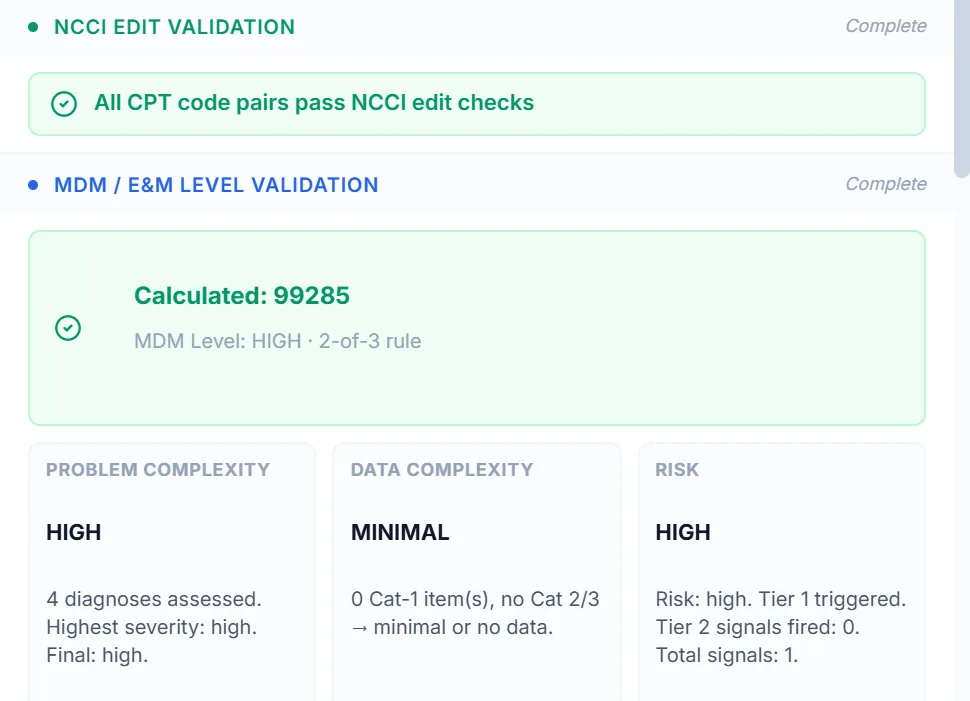
NCCI edits0 errors · 0 warnings
Every pair of procedure codes on the claim is run against the NCCI procedure-to-procedure edits. This one passed with nothing to fix.
E/M level99285 · two of three
The level is rebuilt from the note, not copied from the claim: medical decision making, on the two-of-three rule.
UndercodingNone found
The note is read for work it documents that the claim does not carry. Nothing was left out of this one.

Revenue1.80× assumed
Each line is priced against the fee schedule. The payer was never recorded, so it applies the 1.80× Medicare default and says so beside the figure.
Claim score100 of 100
Clean on every check it runs, and ready for a person to confirm. Nothing leaves until someone does.
Medical decision making has three elements: the problems addressed, the data reviewed and analysed, and the risk of what was decided. The level is the one two of them reach. Here problems and risk reach high; data comes out minimal and stays on the page anyway.
In the emergency department the level comes from decision making alone. Time does not count.
The payer was never recorded, so Sync cannot know the rate this claim will be paid at. It prices the visit from the CMS schedule, applies the 1.80× default for an unknown payer, and keeps that assumption on the screen beside the figure, rather than passing it off as the rate.
99285 · 5.13 RVU × $33.4009 = $171.35 · × 1.80 = $308.43From the platform’s fee schedule, CY2026
“No original hospital coding was available for comparison. Uplift cannot be calculated without a baseline.”
The billing summary, in the platform’s own words
Each line is priced from the CMS Physician Fee Schedule: its relative value units, adjusted for the locality, times the conversion factor and the payer’s multiplier. Where a payer’s contract has been loaded and promoted, its terms price the line.
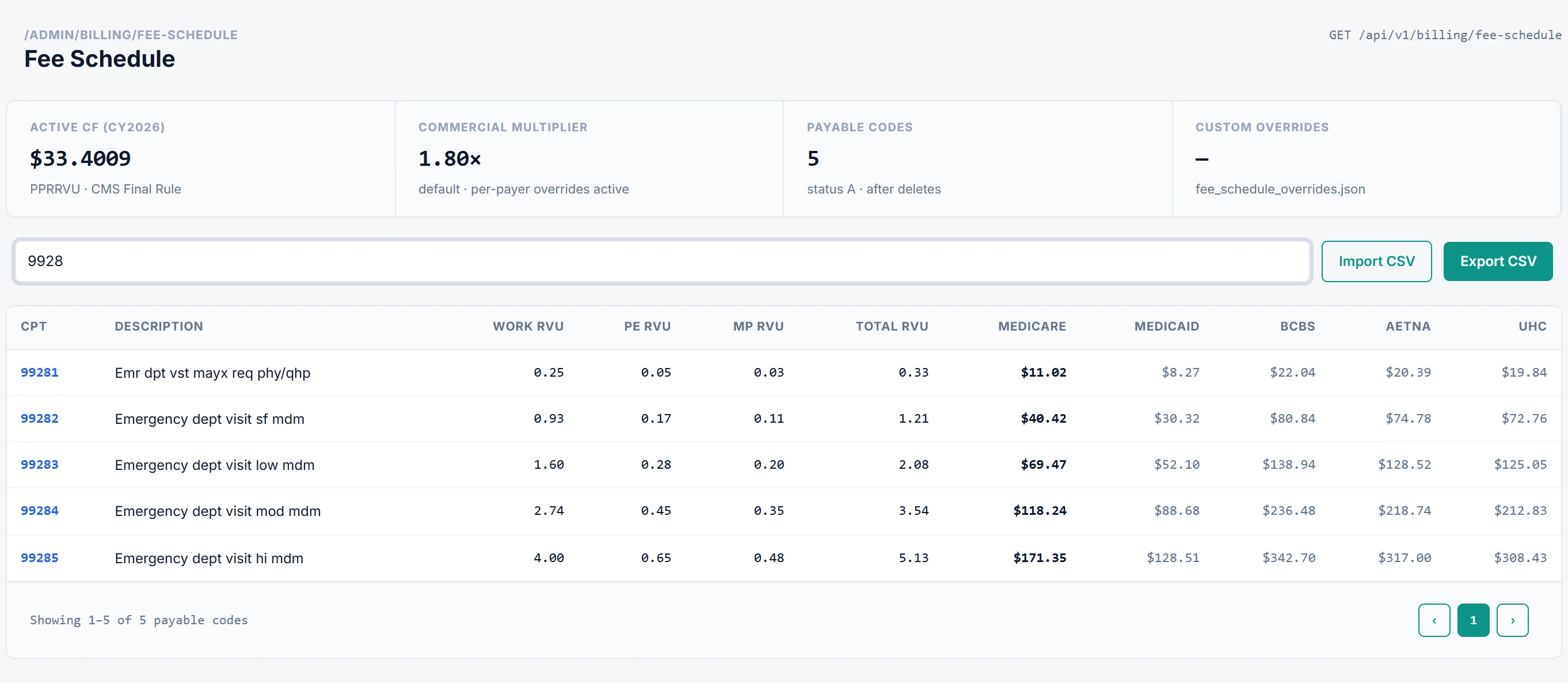
Medicare from the CMS schedule. The payer columns are default multipliers until that payer’s contract is loaded.
A payer’s own contract, from upload to price
The codes drafted while the encounter was open arrive in the claim marked as drafts. A coder confirms, removes or adds to them there, rather than typing them again.
Clinical dashboard during the encounter
Drafted while the patient was still in the room.
Claim codesFrom the analysis · editable
Confirm, remove or add. Nothing is typed twice.
The claim leaves as a package: the encounter, its summary, the scrub, the claim itself and a manifest that fingerprints every file. The billing mode, compliant or maximum defensible, comes from the encounter, and export never raises a code on its own.
Before it goes, eight checks on the claim’s own fields
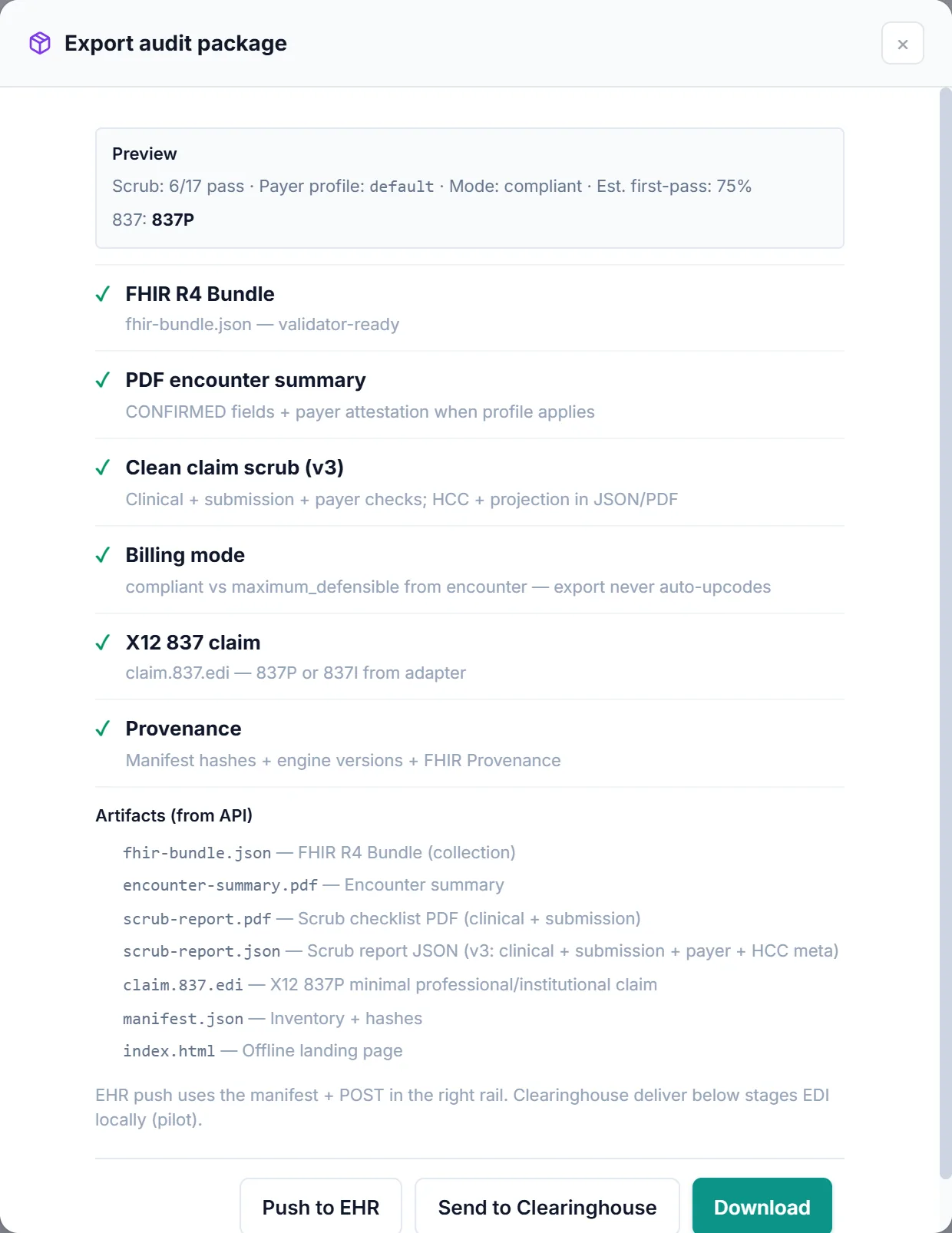
A session’s audit trail is a hash chain: every entry carries the fingerprint of the one before it, so none can be changed without breaking every link after it.
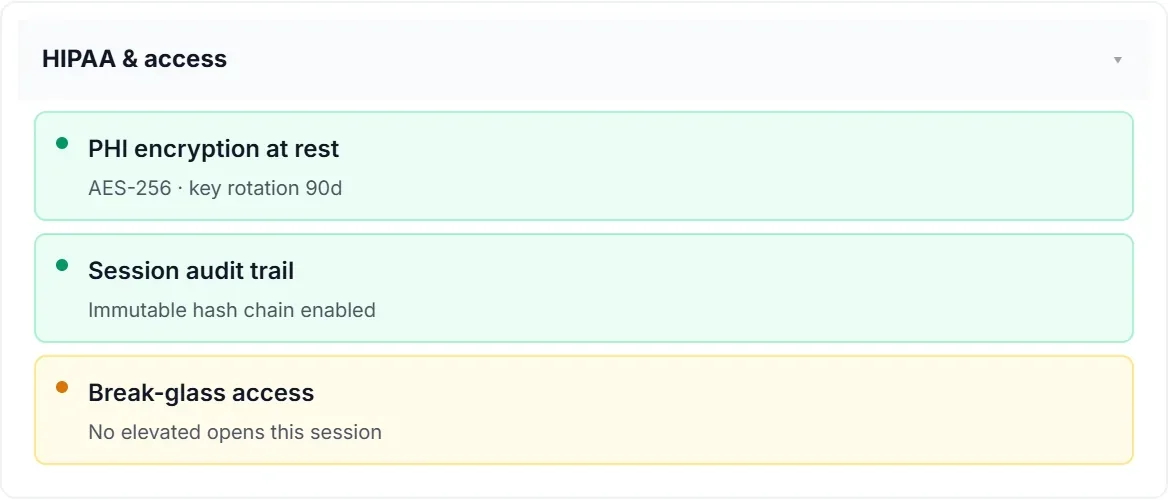
No. It proposes and a person confirms. Export never raises a code on its own, and delivery to the clearinghouse is staged locally in the pilot.
On every claim: the NCCI procedure-to-procedure edits, the E/M level from medical decision making, documented work the claim leaves out, the revenue against the fee schedule and a clean-claim score. On export, eight checks on the claim’s own fields, from the member ID to the diagnosis pointers.
From the note, on the two-of-three rule: the problems addressed, the data reviewed and analysed, the risk of what was decided. In the emergency department the level comes from decision making alone; time does not count.
It says so. An unknown payer is priced at 1.80× Medicare and the multiplier is shown beside the figure. Without the hospital’s own coding there is no baseline, so no uplift is claimed.
A FHIR R4 bundle, a PDF summary, the scrub report, the X12 837 claim, a manifest of hashes and engine versions, and an offline index of the whole package.
On VAS, the system underneath every V3ra product. PHI is encrypted at rest with AES-256, keys rotate every 90 days, and every entry in a session’s audit trail is sealed to the one before.
One encounter, from the codes drafted at the bedside to the package that leaves, on the platform as it runs today.