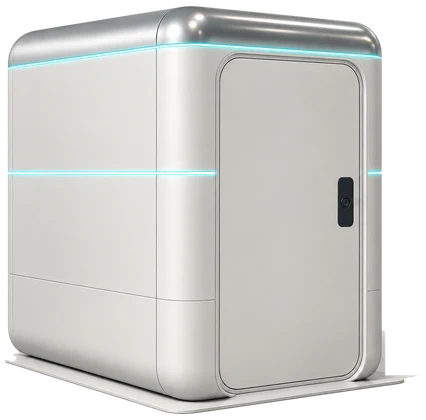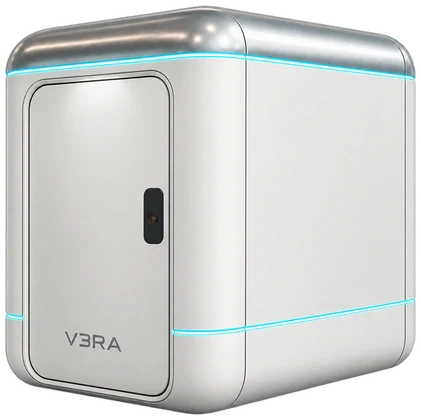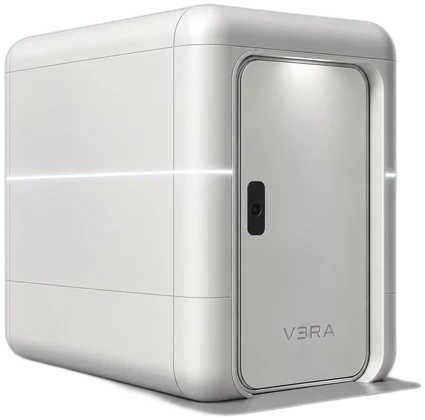
Built for remote and offshore sites.
- 1Built for tight spacesOne enclosure, for sites where there is no room to spare for a clinic.
- 2Readings, not estimatesWeight, blood pressure, heart rate, oxygen saturation and temperature, read off devices and never typed.
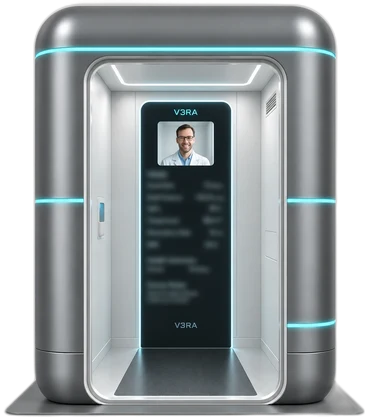
- 3The call stays with a physicianThe Pod triages; a physician on video decides what happens next.
A medic, a link, and a physician.
On a rig or a vessel the clinician on site may be a medic, and the physician is a call away. The Pod measures, listens and triages on site, and the physician sees all of it on the other end of the link.
- Measured on siteWeight and vitals read off connected devices, never estimated.
- Carried over your linkThe physician joins on video, on the connection your site already has.
- Written as it happensOne record of the visit, kept whether or not anyone is evacuated.
Before a Pod goes in.
- Floor spaceRoom for the enclosure, and for a patient to step in
- Power and a networkEnough for the physician’s video, checked on site first
- Someone nearbyFor when the physician asks for a pair of hands
- The link it runs onYour site’s own connection, checked for the physician’s video before a Pod goes in
Everything it runs, on its own.
The same flow in every model. The enclosure changes with the room it stands in; what happens inside it does not.
- Autonomous triageAcuity assigned by Pulse from the vitals and the answers, before a clinician is involved
- Weight, firstOn the integrated scale, because standing still is what the rest of the capture needs
- Vitals off devicesBlood pressure, heart rate, oxygen saturation and temperature, measured rather than typed
- The patient’s own wordsAsked out loud, one question at a time, and only the ones the answers make relevant
- A physician on telehealthJoining with the vitals, the narrative and the cited draft already in hand
- Missing readings flaggedA reading that could not be taken stays empty and is counted, never filled with a default
- One record, door to claimEvery step written once, in order, for the clinicians and the audit that follow
- Built to ADA requirementsThe approach and the screen alike, so the flow is the same for everyone
- Beside your EHRIt runs next to the record you already keep, rather than asking you to move
- Switches and exportsTurn it off at a site or for a clinician, and take the record with you, at any time
Six steps, no front desk.
- 1WelcomeWhat happens next, in plain words
- 2WeightOn the integrated scale, first
- 3VitalsTaken without touching the patient
- 4Their wordsWhat brought them in, out loud
- 5TriageAcuity assigned by Pulse
- 6A physicianJoins on video, holding all of it
The questions remote and offshore sites ask.
The measurements and the account are captured on site and kept. The physician leg is what needs the link, and the visit waits for it rather than being invented without it.
Siting, power and the connection are worked out with your own people before a Pod ships. That conversation is the first part of a pilot.
No. It triages and hands a physician the vitals, the words and the draft. The call, and the cost of it, stays with the physician.
Quotedleased by the month, against your own sites
Encounters are $25 each, published. A Pod is priced on a call, because siting, how many you need and the term all move it. Nothing is charged until an enclosure is yours.
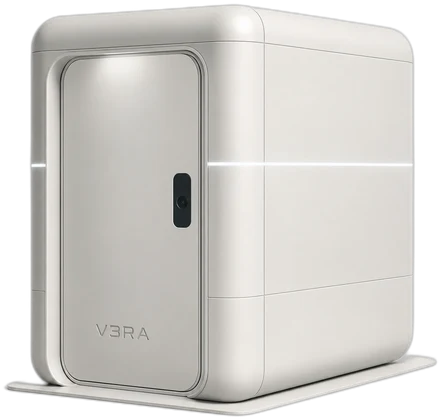 White
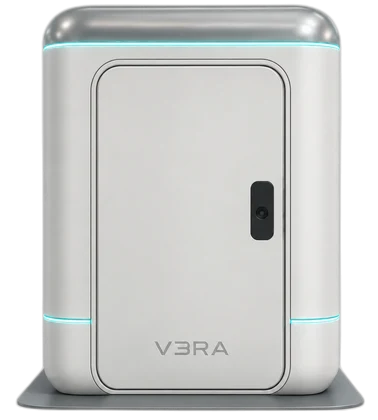 Silver
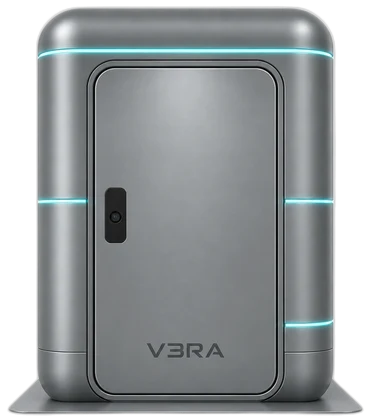 GreyThis model
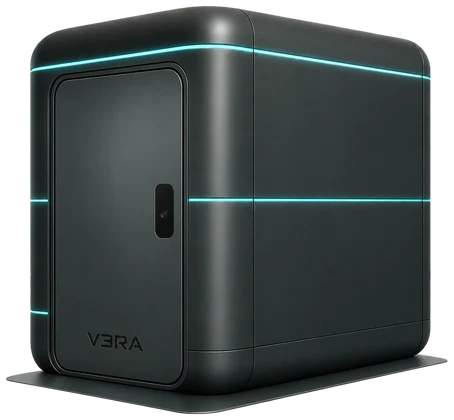 Graphite
Renders, not photographs. Which finishes are offered is settled before the enclosure is manufactured, and manufacturing is planned to begin in the second quarter of next year.
Other models